In a world dominated by digital screens, one might assume outdoor advertising is fading. But the reality is the opposite.
Out-of-Home (OOH) advertising is not just surviving—it’s evolving faster than ever. With the rise of Digital Out-of-Home (DOOH), programmatic buying, and AI-driven targeting, OOH has become one of the most powerful brand-building tools in modern marketing.
In fact, studies show that 88% of consumers notice OOH ads, and nearly 80% engage with them within a short period.
From highways in Lucknow to metro stations in Mumbai, OOH is now a blend of visibility + data + creativity.
Let’s break it down.
1. What is OOH Advertising? (Definition & Meaning)
Quick Summary:
OOH advertising refers to any advertising that reaches consumers outside their homes, typically in public spaces.
Definition:
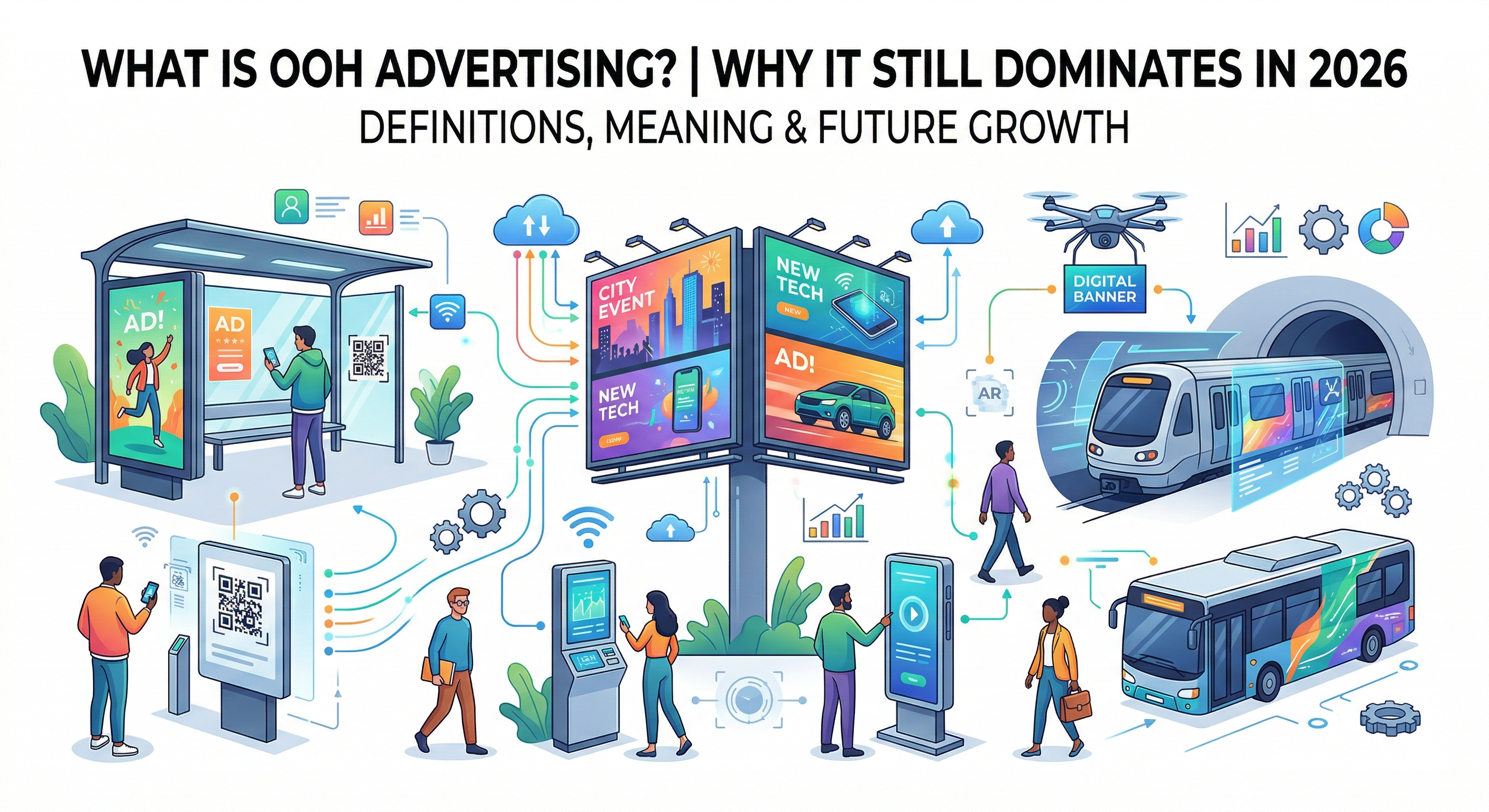
OOH (Out-of-Home) advertising is a form of marketing that targets audiences when they are on the move, using formats like billboards, transit media, street furniture, and digital screens.
Simple Meaning:
If your audience sees your ad while commuting, shopping, or traveling—it’s OOH.
Examples of OOH Advertising:
- Billboards on highways
- Metro/train branding
- Bus shelters & kiosks
- Airport displays
- Mall screens
- Digital LED hoardings
Unlike digital ads, OOH is unskippable, unavoidable, and high-impact—making it ideal for brand recall.
2. Types of OOH Advertising You Should Know
Quick Summary:
OOH has evolved from static hoardings to dynamic, data-driven formats.
1. Traditional OOH
- Static billboards
- Posters & wall wraps
- Pole kiosks
2. Transit Advertising
- Buses, autos, cabs
- Metro branding
- Airport ads
3. Street Furniture
- Bus stops
- Benches
- Public kiosks
4. Digital OOH (DOOH)
- LED billboards
- Mall screens
- Interactive displays
5. Programmatic OOH (pOOH)
- Automated ad buying
- Real-time targeting
- AI-driven placements
👉 Today, DOOH is becoming dominant, with a major share of OOH budgets shifting to digital formats.
3. Why OOH Advertising Still Works (Backed by Data)
Quick Summary:
OOH delivers unmatched visibility, recall, and trust compared to many digital formats.
Key Stats:
- 90% of travelers notice OOH ads
- Higher ad recall than TV, radio, and online ads
- 40% of marketers plan to increase OOH spend
Why It Works:
1. Non-Skippable Attention
You can scroll past Instagram ads—but not a 40-ft billboard.
2. High Frequency Exposure
Daily commute = repeated brand exposure.
3. Trust & Credibility
Consumers perceive OOH brands as more established.
4. Geo-Targeting Advantage
Perfect for city-based campaigns like Lucknow-focused promotions.
5. Complements Digital Marketing
OOH boosts search traffic, brand recall, and conversions indirectly.
4. The Rise of DOOH & Programmatic OOH (The Real Game-Changer)
Quick Summary:
Modern OOH is now powered by data, automation, and AI.
The biggest transformation in OOH advertising is Digital Out-of-Home (DOOH).
What Makes DOOH Powerful:
- Real-time content updates
- Weather-based ads
- Time-based messaging
- Audience targeting
- Programmatic buying
For example:
A cold drink brand can show ads only during hot afternoons—automatically.
Industry Shift:
- DOOH is expected to account for a significant share of OOH spend by 2029
- AI and data are making campaigns hyper-local and personalized
Trending Innovation:
- 3D anamorphic billboards
- Interactive screens
- QR-integrated campaigns
This is where OOH meets performance marketing.
5. How Brands Use OOH Advertising Strategically (Real-World Approach)
Quick Summary:
OOH is no longer just branding—it’s part of full-funnel marketing.
1. Brand Awareness Campaigns
Mass visibility across cities
→ Example: IPL team promotions, product launches
2. Hyperlocal Targeting
City-specific messaging
→ Example: Lucknow-only campaigns
3. Integrated Campaigns
OOH + Digital + Social Media
→ Billboard + Instagram + QR code
4. Event-Based Advertising
- Festivals
- Matches
- Weather-triggered ads
5. Performance-Driven OOH
- Footfall tracking
- Brand lift measurement
- Search uplift tracking
👉 In India, OOH is shifting from visibility to measurable impact, making brands more selective and ROI-focused.
Conclusion: OOH is No Longer Traditional—It’s Transformational
OOH advertising has evolved from static billboards into a smart, data-driven, high-impact marketing channel.
For brands like BBM and its clients, OOH is not just about presence—it’s about strategic visibility that drives real business outcomes.
In 2026, the winning strategy is clear:
👉 Digital + Outdoor + Data = Maximum Impact
FAQs (SEO Boost Section)
1. What does OOH advertising mean?
OOH advertising refers to marketing seen outside the home, such as billboards, transit ads, and digital screens.
2. Is OOH advertising effective in 2026?
Yes. With high recall, visibility, and integration with digital, OOH remains one of the most effective branding channels.
3. What is DOOH advertising?
DOOH (Digital Out-of-Home) uses digital screens to display dynamic, real-time ads.
4. How is OOH different from digital marketing?
OOH focuses on physical visibility and brand recall, while digital focuses on clicks and conversions.
5. What are examples of OOH advertising?
Billboards, metro branding, bus ads, airport screens, and mall displays.